
Billy Beane found a window. Then everyone else saw it
In 2002, Beane found a metric no one was tracking. By 2005, everyone was. The real Moneyball story isn't about OBP — it's about windows that always close, and why funding constraints beat unlimited capital.

Arbitrage, not a formula
When Michael Lewis first walked into the Oakland Athletics' box in 2002, he said something to Billy Beane that no normal sports journalist would have said: "I know exactly what you're doing. You're arbitraging the mispricing of players."
Lewis, a Princeton grad and former Salomon Brothers bond trader, applied to baseball the only concept he understood deeply. It turned out to be enough.

The logic is simple. The MLB market values speed, raw power, physical beauty, a clean swing. The market values the wrong things. The game is decided by outs: every team has 27 of them per game, and the team that learns not to give them away wins. Hence the metric: on-base percentage, OBP, the percentage of plate appearances that get you on base. A boring number nobody was tracking.
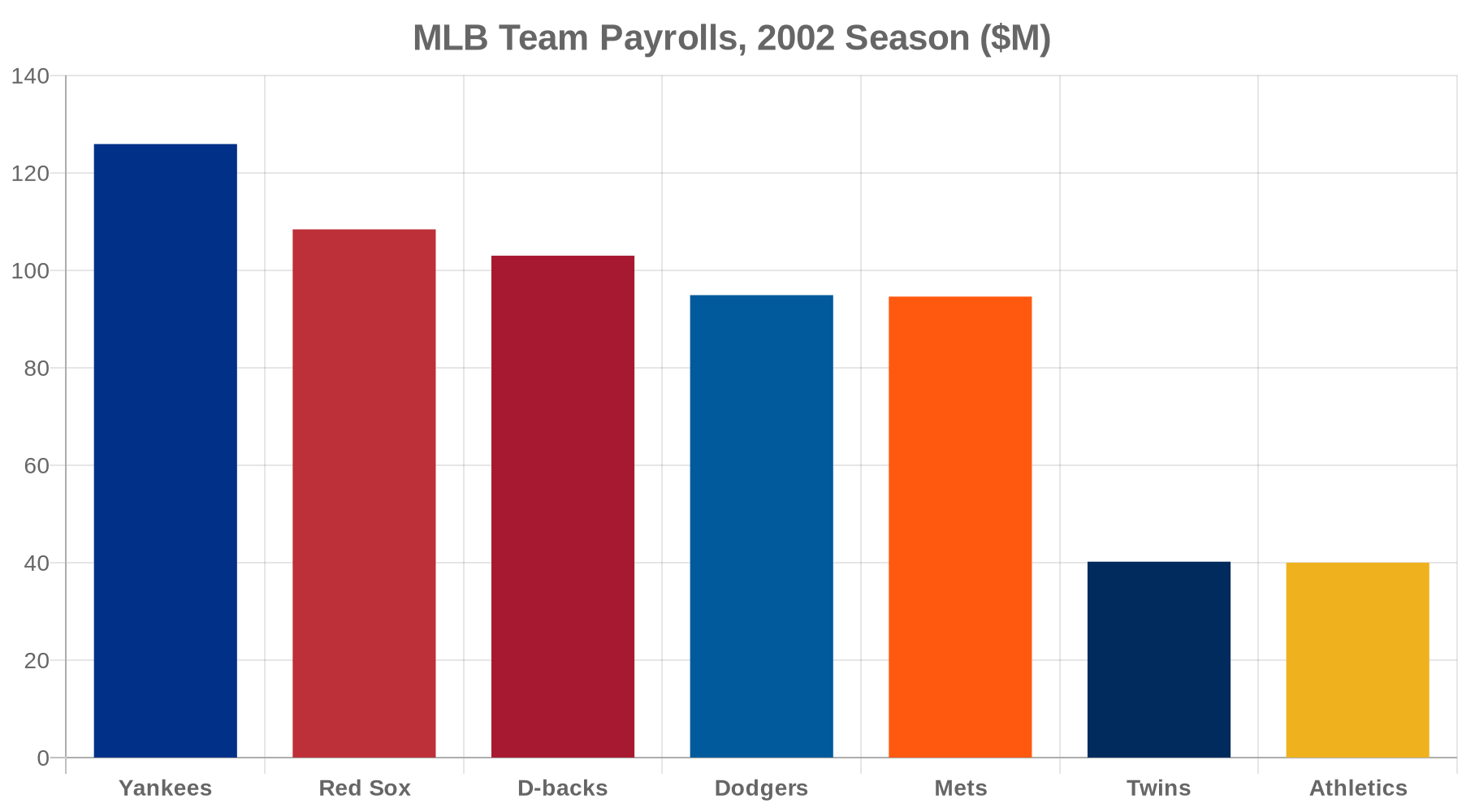
Oakland's 2002 payroll was $40 million. The Yankees' was $125.9 million. 24% of their rival. And Oakland posted the same regular-season result: 103 wins in 162 games, exactly equal to the Yankees.
The book became an NYT bestseller. The Brad Pitt movie pulled six Oscar nominations. Moneyball became a meme in dozens of industries, from HR to venture capital.
Now the boring part the movie skips.
The window was eighteen months wide

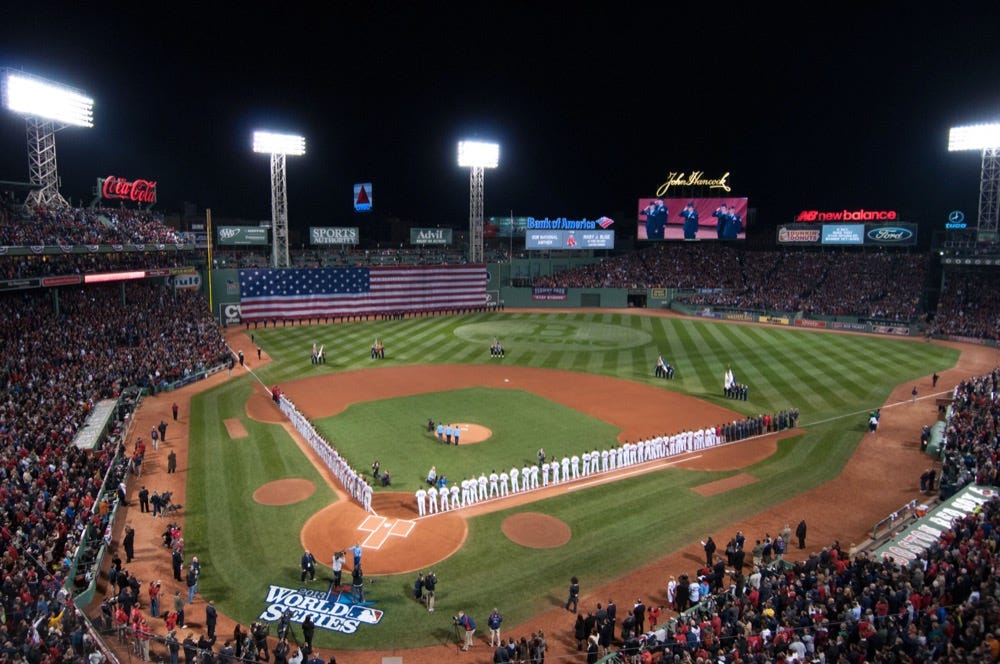
In November 2002, two months after Oakland's 20-game winning streak, the Boston Red Sox did the one thing that killed Moneyball as Oakland's edge. They hired Bill James — yes, the night watchman from a Kansas pork-and-beans plant who self-published his first statistical treatise in 1977 and sold 75 copies. James was the ideologue behind everything Beane was doing. Boston put him on payroll, copied the methodology, and while Beane was scratching for playoff berths on $40 million, the Red Sox — with three times the payroll — won the World Series in 2004, then 2007, then 2013.
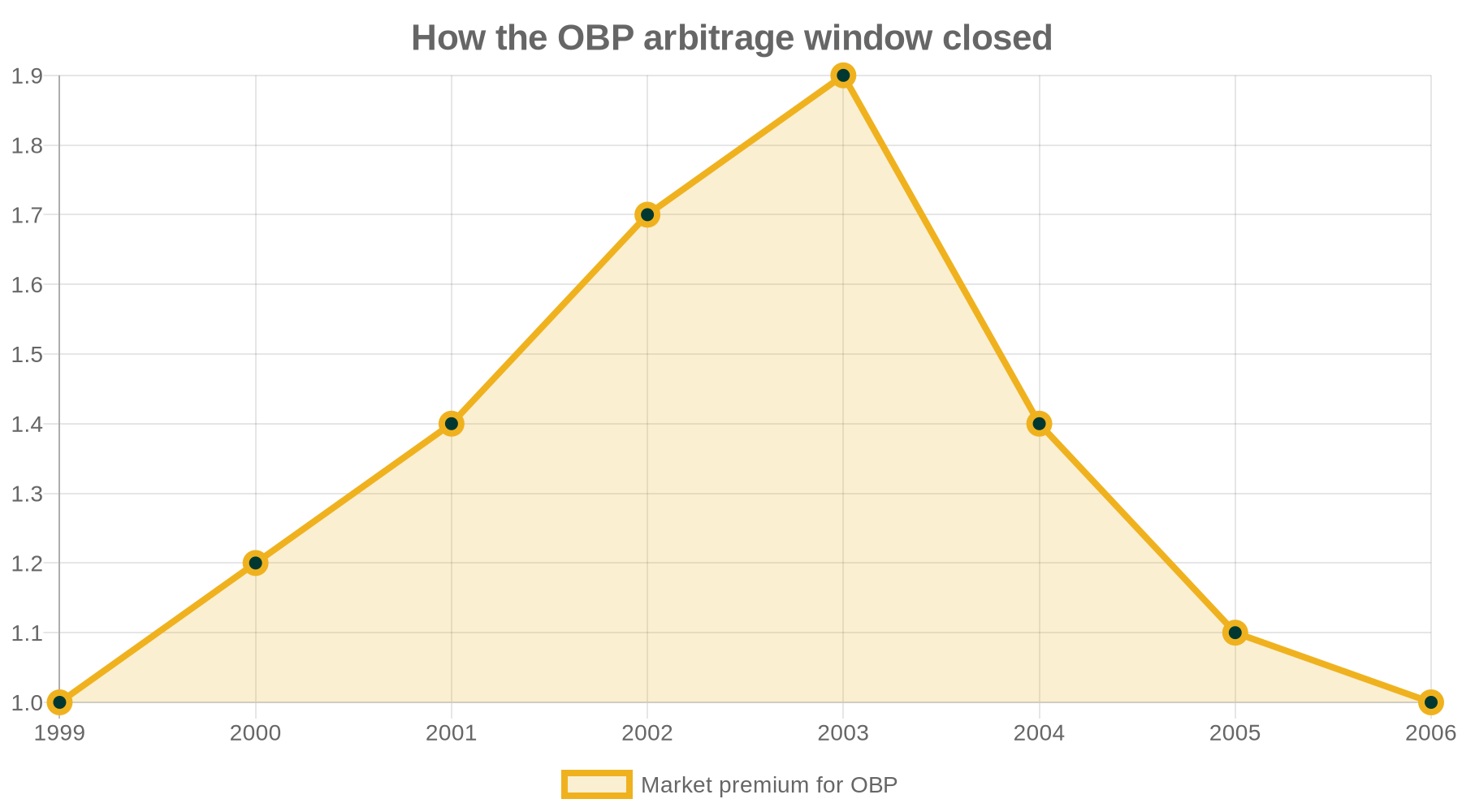
Economists Jahn Hakes and Raymond Sauer published a paper in 2006 that should have closed the discussion. They confirmed it: the MLB market did undervalue OBP from 2000 through 2003. Then it didn't. The arbitrage window closed in roughly a season and a half. Later work by Holmes, Simmons, and Berry (2013, 2018) showed there was almost no long-term effect on OBP pricing. The market corrected itself.
The biggest beneficiaries of Moneyball weren't small-market teams. They were the big-market clubs that picked up the methodology and had the cash to fully execute it. Yankees. Red Sox. Dodgers. Everyone learned.
Beane gets it. In dozens of interviews he says the same thing: "Real Moneyball is finding what the market is undervaluing in a given moment. Once it was OBP. Then defense. Then pitch framing. Now it's something else."
So Moneyball isn't a formula. Moneyball is a movement.
Why constraint forced the search
Startups have a culture of abundance. With a $5M seed, you'll find product-market fit. With a $50M Series B, you'll close the market. With $500M, you'll buy out anyone in the way.
Reality is worse. Excess capital is an alibi for not having to think. With $125 million in payroll, the Yankees had no incentive to ask: what exactly are we counting here? They counted what everyone counted, and overpaid for the same players.
Oakland didn't have that option. $40 million wasn't a frugal ambition; it was the survival range. When you can't pay an MVP shortstop the market price, you're forced to sit down and ask: what are we mispricing? Who costs significantly less than what they generate? Why doesn't anyone else see it?
This isn't theory. It's the explanation for why Netflix in 1997 didn't become Blockbuster #2 — it rewrote the genre of consuming film. Why Stripe in 2010 didn't build a payment processor copying PayPal — it solved a problem the market hadn't even labeled as a problem. Why Figma refused to fight Adobe on its own field and redefined the field through the browser.
Constraint doesn't drive creativity in some general sense. It drives a very specific cognitive operation: looking for what the market is mispricing. Arbitrage, as Lewis says. With $500 million, you don't need to find a window — you can just buy the field. With $40, you either find the window or you lose.
Why OBP never won a championship
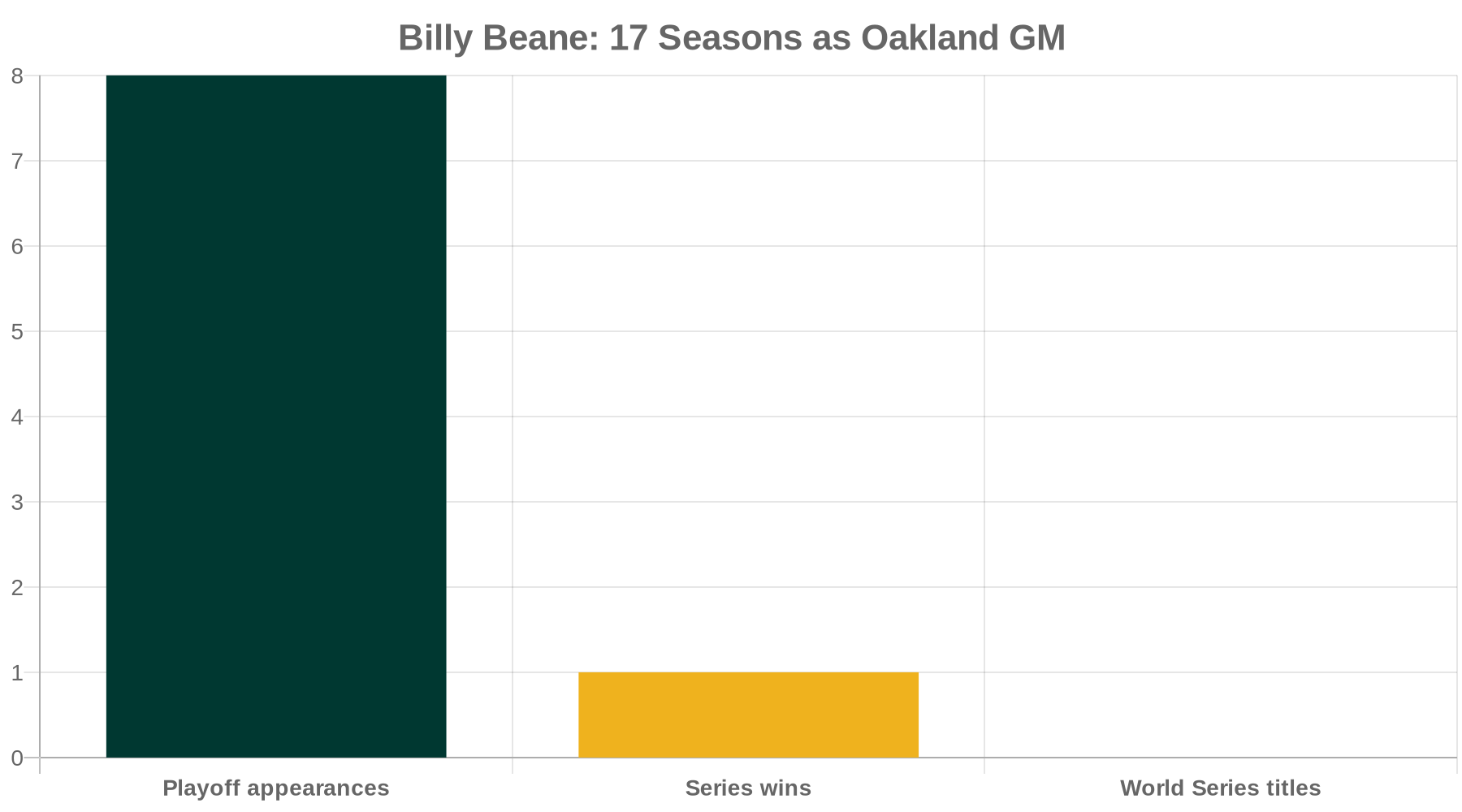
The movie doesn't go anywhere near this part. In Beane's 17 seasons as Oakland's GM (1998–2015), the team made the playoffs eight times. And won exactly one playoff series — the 2006 ALDS against Minnesota. That's it.
Seven straight win-or-go-home games — Oakland lost. Five of them at home. Four ALDS in 2000–2003 — all decided in Game 5.
Beane famously told Lewis: "My shit doesn't work in the playoffs. My job is to get us to the playoffs. What happens after that is fucking luck."
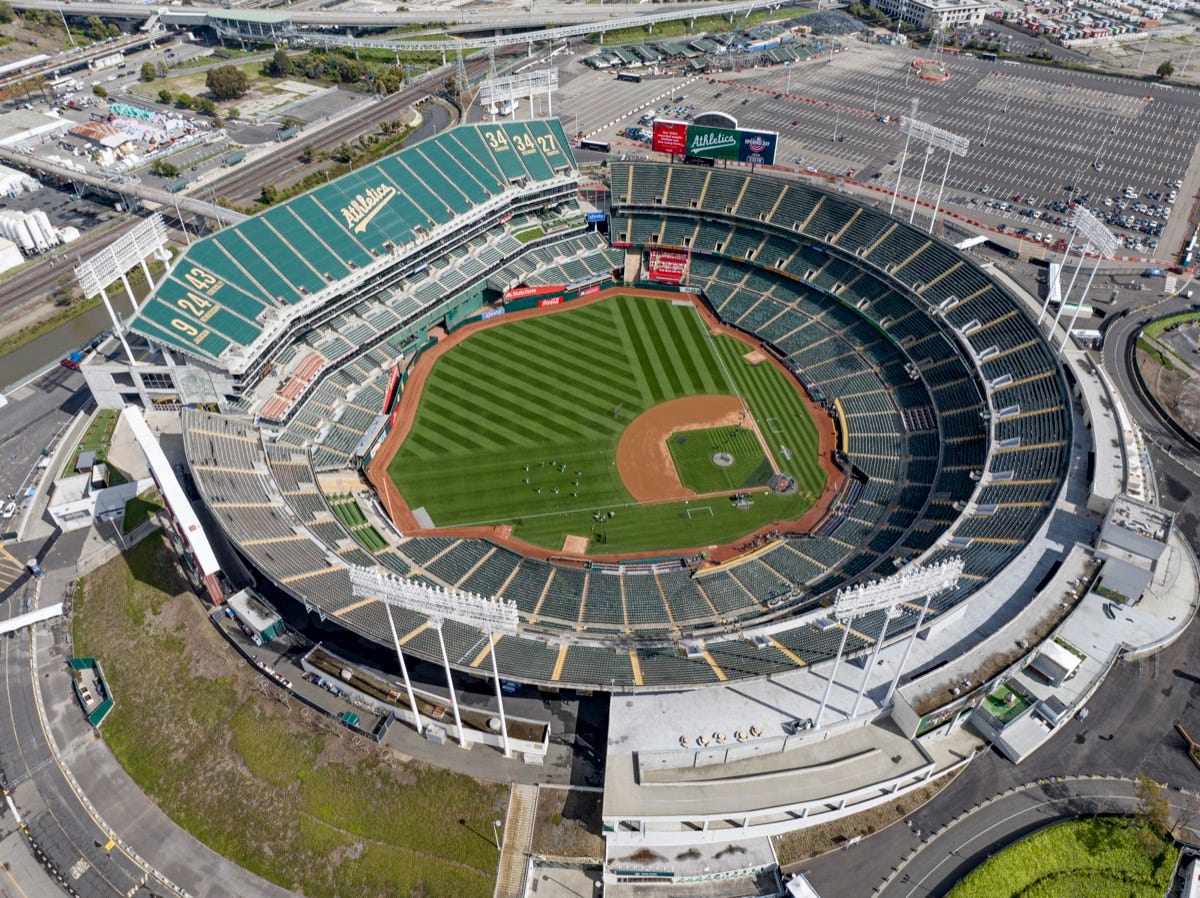
He likes the sabermetric logic of that line: small sample, high variance, noise dominates signal. But for a startup the lesson runs deeper. Arbitrage works as long as you're plundering an inefficient market. In a short series against a systemic opponent who has the same data and twice the capital, you get outplayed. The market, it turns out, was right that the playoffs are a different sport.
The window closes. Then your competitors close it for you, faster than you can move.
Next window, then the next
After 2003 Beane stopped looking for one formula. He looked for the next window. Then the next. Then another.
Defensive metrics in the late 2000s. Platoons. Pitch framing in 2017 — when Beane signed catcher Jonathan Lucroy at an anomalously low price specifically because of that not-yet-priced metric. Volatile premium pitchers on short contracts: Lester, Kazmir, Samardzija. Each cycle gave him two or three seasons of edge before the market caught up.
In 2015 he stepped outside baseball entirely. European football: a market orders of magnitude bigger than MLB, fragmented across hundreds of leagues with no salary cap and largely subjective scouting. AZ Alkmaar in the Netherlands, where the 2015/16 net transfer profit was €15.1M and forward Vincent Janssen — bought from a second-division side for €500K — was sold to Tottenham for €22M. Barnsley in the English Championship, finishing fifth in 2020/21 under Valérien Ismaël with one of the smallest wage bills in the league.

RedBall Acquisition Corp — the first sports SPAC on NYSE, $575 million raised, target: buy Fenway Sports Group along with Liverpool. In late 2020 the deal was close. In 2022 RedBall quietly wound down and returned investors $10 per share. Two of three big bets fell apart.
Not every window opens. Not every window that opens lets you close the deal. That's the part nobody wants to hear when they're talking about "disruptive strategies."
What the startup takes from this
Three things.
First, the window is temporary. Anything you found non-obvious will become obvious to the market in two or three years. Planning for sustained advantage off a single insight is planning to lose. Plan instead for the second, third, fifth metric you'll be hunting once the first one closes. Your edge isn't what you found. Your edge is the trained habit of finding.
Second, constraint doesn't kill you until it makes you passive. Beane wasn't being frugal — he was forced. And the force became the source of the methodology. With unlimited budget, you have no incentive to ask uncomfortable questions about what you're mispricing. Excess capital isn't an advantage. It's anesthesia.
Third, don't fall in love with the metric. Fall in love with the ability to find the next one. Moneyball isn't about OBP. Moneyball is about the discipline to ask "what is this market mispricing right now?" and the discipline to find the answer faster than anyone else.
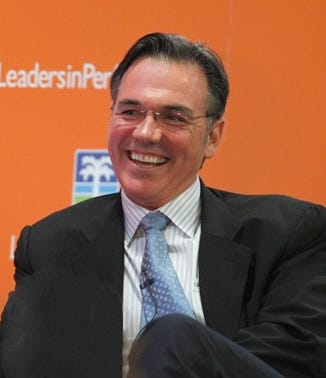
Beane knows this better than anyone. He never won a World Series. His team moved from Oakland to Sacramento and is heading to Las Vegas. His SPAC closed without a deal. His on-screen double got an Oscar nomination, his theory became an industry standard, and he told an Athletic reporter in 2019: "I won everything except the thing we call winning."
That's the whole story. Not about a metric. About a window that always closes, and a man who never stopped looking for the next one.
Sources
Hakes & Sauer (2006): An Economic Evaluation of the Moneyball Hypothesis